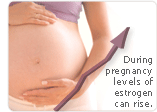
Estrogens are both found in males and females but they occur more importantly in women than in men. In non pregnant women, estrogen is produced mainly synthesizes estradiol in minute amount while in pregnant women especially as the pregnancy progresses, increase in the estrogen level arises. Major production shifts from estradiol to estriol with only small amounts of estradiol is synthesized. That is why in pregnant women, urine estrogens are being tested to monitor the development of the unborn child.
Kober reaction
It is employed for urine estrogen determination.It involves heating a urine sample in a strong aqueous sulfuric acid solution containing hydroquinone. After cooling and dilution, the absorbance of the resulting reddish-brown color is measured and total estrogen concentration determined.
Precautions
Prior to analysis:
- The sample must be checked for glucose concentration
- Ask if the patient is on oral contraceptives
- Had been taking antibiotics like ampicillin or neomycin
- Other drugs like meprobamate, L-dopa and phenolphthalein
A 24-hour urine specimen is required
Major Drawbacks for this test
- Time needed for the collection of the sample
- Problems in obtaining a proper specimen
- Analytical methodology is often lengthy
Reference:
Clinical Chemistry. A Fundamental Textbook by Donald F. Calbreath pp. 326-327; 357-358




 RSS Feed (xml)